Buy coexistence.eu ?
We are moving the project
coexistence.eu .
Are you interested in purchasing the domain
coexistence.eu ?
domain@kv-gmbh.de · 0541-91531010
Buy coexistence.eu ?
How can the tolerance range of a tolerance curve in ecology be determined?
The tolerance range of a tolerance curve in ecology can be determined through experimental studies and field observations. Researchers can expose organisms to different levels of a limiting factor, such as temperature, pH, or salinity, and measure their responses. By recording the upper and lower limits at which the organisms can survive and thrive, a tolerance curve can be constructed to show the range of conditions within which the organism can function. Additionally, long-term monitoring of populations in their natural habitats can provide valuable data on the tolerance range of a species. **
How can the tolerance range of a tolerance curve be determined in ecology?
The tolerance range of a tolerance curve in ecology can be determined by conducting experiments that expose organisms to different levels of a limiting factor, such as temperature, pH, or salinity. By measuring the performance or survival of the organisms at each level of the factor, researchers can identify the upper and lower limits at which the organisms can tolerate the factor. The range between these limits represents the tolerance range of the organisms, providing valuable information about their ecological niche and potential responses to environmental changes. **


Similar search terms for MACMILLAN-Range-How-Generalists
Top-Angebote
Products related to MACMILLAN-Range-How-Generalists:
-
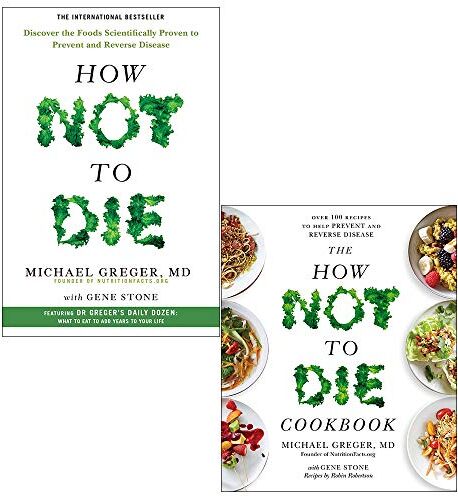
Pan Macmillan How Not To Die 2 Books Collection Set by Dr Michael Greger and Gene Stone (How Not To Die, How Not To Die Cookbook)How Not To Die Why rely on drugs and surgery to cure you of life-threatening disease when the right decisions can prevent you from falling ill to begin with? How Not To Die gives effective, scientifically-proven nutritional advice to prevent our biggest killers - including heart disease, breast cancer, prostate cancer, high blood pressure and diabetes - and reveals the astounding health benefits that simple dietary choices can provide. How Not To Die Cookbook Dr Michael Greger, founder of the wildly popular website NutritionFacts, takes his comprehensive, lifesaving science into the kitchen. Why suffer from disease and ill health when the right food is proven to keep you healthy, and without the side effects of drugs? We can avoid heart disease, cancer and our other biggest killers if we use food as medicine, and the How Not To Die Cookbook offers a sustainable and delicious guide to preparing and eating the foods that will prevent and reverse fatal diseases.15,45 £*Shipping: 2,99 £Secure redirect to the provider
-
Pan Macmillan Hyperfocus: How to Work Less to Achieve More by Chris BaileyHyperfocus by Chris Bailey is a practical guide to managing your attention – the most powerful resource you have to become more creative, get stuff done, and live a more meaningful life.In Hyperfocus, you will learn:- How working fewer hours can increase our productivity- How we get more done by making our work harder, not easier- How we do our best creative work when we're the most tiredOur attention has never been as overwhelmed as it is today and we've never been so busy while accomplishing so little.In Hyperfocus, Chris Bailey provides profound insights into how we can best manage our attention. He reveals how the brain switches between two mental modes – hyperfocus, our deep concentration mode, and scatterfocus, our creative, reflective mode – and how the surest path to being our most creative and efficient selves at work is to combine them both.2,99 £*Shipping: 1,99 £Secure redirect to the provider
-
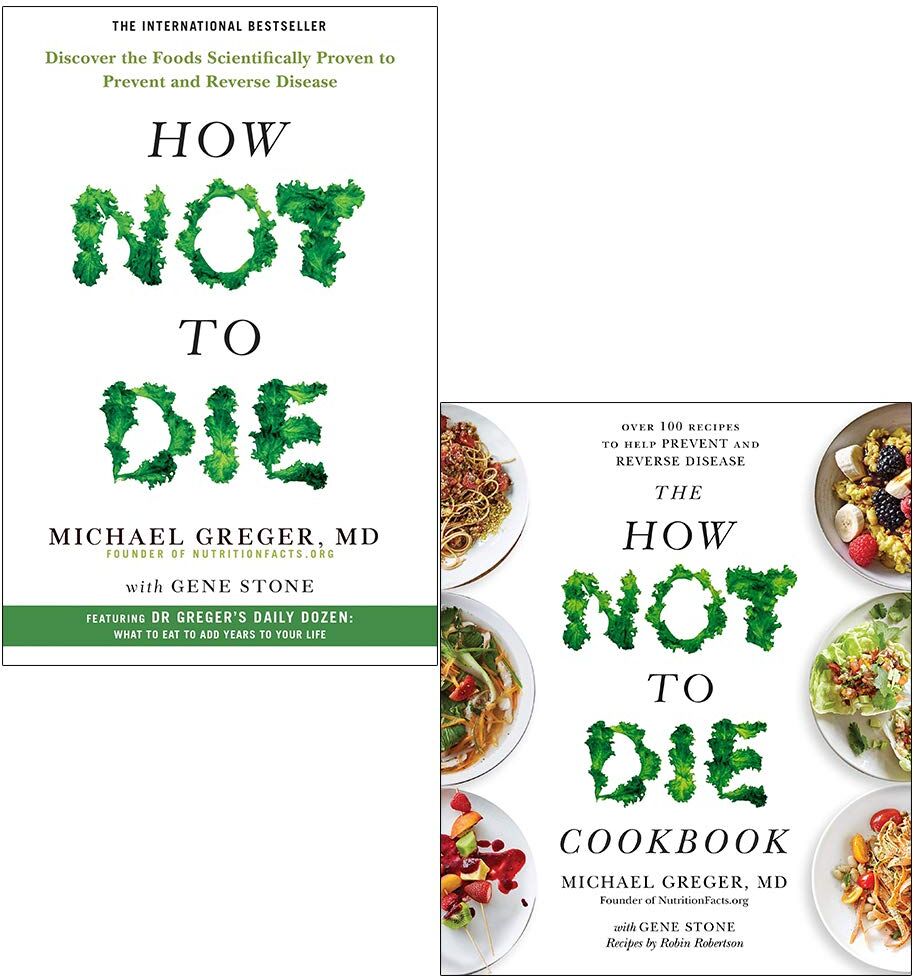
Pan Macmillan Michael Greger How Not To Die 2 Book Collection Set - How Not To Die + Cookbook - Paperback - Health & Diet Non FictionThis two-book paperback set by Dr Michael Greger pairs his landmark nutrition science with the recipes needed to put it into action. 'How Not To Die' distils decades of peer-reviewed research into clear guidance on preventing and reversing the diseases that kill most people, while 'The How Not To Die Cookbook' turns that science into over 100 delicious plant-based dishes. Together they form a complete, evidence-based toolkit for healthier eating. The books examine the fifteen leading causes of premature death, including heart disease, diabetes, high blood pressure and several cancers, and provide a comprehensive approach to nutrition and wellness.15,49 £*Shipping: 2,99 £Secure redirect to the provider
-
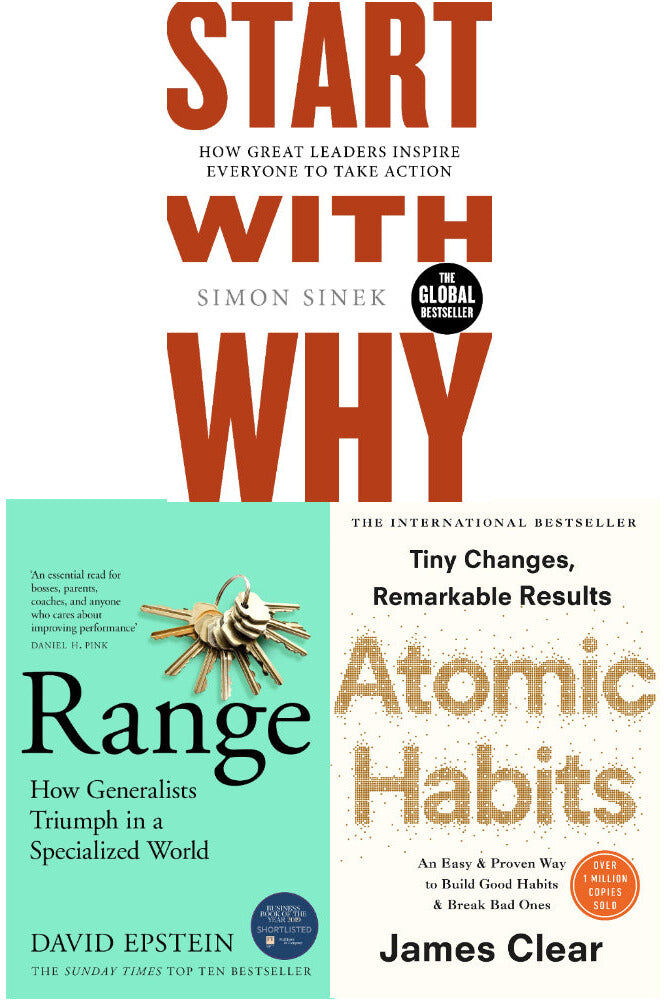
Pan Macmillan Atomic Habits, Range, Start With Why 3 Books Collection SetAtomic Habits, Range, Start With Why 3 Books Collection Set Range: How Generalists Triumph in a Specialized World From the ‘10,000 hours rule’ to the power of Tiger parenting, we have been taught that success in any field requires early specialization and many hours of deliberate practice. And, worse, that if you dabble or delay, you'll never catch up with those who got a head start. This is completely wrong. In this landmark book, David Epstein shows you that the way to succeed is by sampling widely, gaining a breadth of experiences, taking detours, experimenting relentlessly, juggling many interests – in other words, by developing range. Atomic Habits: the life-changing People think that when you want to change your life, you need to think big. But world-renowned habits expert James Clear has discovered another way. He knows that real change comes from the compound effect of hundreds of small decisions: doing two push-ups a day, waking up five minutes early, or holding a single short phone call. Start With Why: The Inspiring THE MILLION-COPY GLOBAL BESTSELLER - BASED ON THE LIFE-CHANGING TED TALK!WHAT READERS ARE SAYING ABOUT START WITH WHY:'It's amazing how a book can change the course of your life, and this book did that' Reader Review'Imagine the Ted Talk expanded to 2 hours long, with more depth, intrigue and examples' Reader Review'What he does brilliantly is demonstrate his own why - to inspire others - throughout' Reader Review'Wow. Wow. Wow.19,99 £*Shipping: 2,99 £Secure redirect to the provider

-
What is the tolerance range in biology?
In biology, tolerance range refers to the range of environmental conditions within which an organism can survive and function effectively. It includes factors such as temperature, pH, salinity, and humidity. Organisms have specific tolerance ranges for these factors, and if conditions fall outside of this range, it can lead to stress, reduced growth, or even death. Understanding an organism's tolerance range is important for conservation efforts and managing ecosystems in the face of environmental changes. **
-
What is the minimum in the tolerance range?
The minimum in the tolerance range is the lowest acceptable value for a particular measurement or dimension. It represents the lower limit within which a product or part is considered to be within acceptable quality standards. Any measurement or dimension falling below the minimum tolerance range would be considered out of specification and would likely require corrective action. The minimum tolerance range is an important consideration in manufacturing and quality control to ensure that products meet the required specifications. **
-
What is the difference between ecological potential and tolerance range?
Ecological potential refers to the full range of environmental conditions under which a species can survive and reproduce, including optimal conditions for growth and reproduction. Tolerance range, on the other hand, refers to the specific range of environmental conditions within which a species can survive and function, beyond which it may experience stress or even death. In essence, ecological potential is the broader range of conditions a species can potentially inhabit, while tolerance range is the narrower range within which it can actually thrive. **
-
What is the difference between ecological potential and the tolerance range?
Ecological potential refers to the maximum level of environmental conditions that a species can tolerate and thrive in, including factors such as temperature, humidity, and food availability. Tolerance range, on the other hand, refers to the range of environmental conditions within which a species can survive, but not necessarily thrive. In other words, ecological potential represents the optimal conditions for a species, while the tolerance range represents the broader range of conditions within which it can still survive. **
Is there a difference between ecological potency and the tolerance range?
Yes, there is a difference between ecological potency and tolerance range. Ecological potency refers to the ability of a species to exert an influence on its environment, such as through competition or predation. Tolerance range, on the other hand, refers to the range of environmental conditions within which a species can survive and reproduce. In other words, ecological potency is about the impact a species has on its environment, while tolerance range is about the environmental conditions a species can withstand. **
How is the range determined?
The range is determined by finding the difference between the highest and lowest values in a set of data. It represents the spread or variability of the data and provides a measure of the dispersion of the values. By subtracting the lowest value from the highest value, we can calculate the range and understand the extent of the data's distribution. The range is a simple and quick way to assess the spread of the data, but it can be sensitive to outliers and may not provide a complete picture of the data's variability. **
Top-Angebote
Products related to MACMILLAN-Range-How-Generalists:
-
MACMILLAN Range: How Generalists Triumph in a Specialized World by David EpsteinThe instant Sunday Times Top Ten and New York Times bestseller Shortlisted for the Financial Times/McKinsey Business Book of the Year Award A Financial Times Essential Reads A powerful argument for how to succeed in any field: develop broad interests and skills while everyone around you is rushing to specialize. From the ‘10,000 hours rule’ to the power of Tiger parenting, we have been taught that success in any field requires early specialization and many hours of deliberate practice. And, worse, that if you dabble or delay, you'll never catch up with those who got a head start. This is completely wrong. In this landmark book, David Epstein shows you that the way to succeed is by sampling widely, gaining a breadth of experiences, taking detours, experimenting relentlessly, juggling many interests – in other words, by developing range. Studying the world's most successful athletes, artists, musicians, inventors and scientists, Epstein demonstrates why in most fields – especially those that are complex and unpredictable – generalists, not specialists are primed to excel. No matter what you do, where you are in life, whether you are a teacher, student, scientist, business analyst, parent, job hunter, retiree, you will see the world differently after you've read Range. You'll understand better how we solve problems, how we learn and how we succeed. You'll see why failing a test is the best way to learn and why frequent quitters end up with the most fulfilling careers. As experts silo themselves further while computers master more of the skills once reserved for highly focused humans, Range shows how people who think broadly and embrace diverse experiences and perspectives will increasingly thrive and why spreading your knowledge across multiple domains is the key to your success, and how to achieve it.3,99 £*Shipping: 1,99 £Secure redirect to the provider
-
How Not to Age: by Michael Greger - Non Fiction - Paperback Pan MacmillanThe Scientific Approach to Getting Healthier as You Get Older Live better for longer with this ultimate guide to longevity from the author of How Not to Die. We all want to stay healthy as we age but, with so many different claims out there, it can be hard to know the best advice to follow. In How Not to Age, Dr Michael Greger digs into the top peer-reviewed anti-ageing research to deliver a complete and optimal guide with simple steps to extend your lifespan and slow the adverse effects of ageing. Inspired by the dietary and lifestyle patterns of the world’s centenarians and residents of ‘blue zone’ regions where people live the longest, Dr Greger presents easy, evidence-based ways to preserve the body functions that keep us feeling youthful, both physically and mentally. Can an apple a day really keep the doctor away? What’s better for your longevity, jogging for four hours or eating two handfuls of nuts twice a week? Brimming with expertise, How Not to Age lays out practical strategies for living your longest, healthiest life – and for enjoying every moment of it.10,99 £*Shipping: 2,99 £Secure redirect to the provider
-
Pan Macmillan How Not To Die 2 Books Collection Set by Dr Michael Greger and Gene Stone (How Not To Die, How Not To Die Cookbook)How Not To Die Why rely on drugs and surgery to cure you of life-threatening disease when the right decisions can prevent you from falling ill to begin with? How Not To Die gives effective, scientifically-proven nutritional advice to prevent our biggest killers - including heart disease, breast cancer, prostate cancer, high blood pressure and diabetes - and reveals the astounding health benefits that simple dietary choices can provide. How Not To Die Cookbook Dr Michael Greger, founder of the wildly popular website NutritionFacts, takes his comprehensive, lifesaving science into the kitchen. Why suffer from disease and ill health when the right food is proven to keep you healthy, and without the side effects of drugs? We can avoid heart disease, cancer and our other biggest killers if we use food as medicine, and the How Not To Die Cookbook offers a sustainable and delicious guide to preparing and eating the foods that will prevent and reverse fatal diseases.15,45 £*Shipping: 2,99 £Secure redirect to the provider
-
Pan Macmillan Hyperfocus: How to Work Less to Achieve More by Chris BaileyHyperfocus by Chris Bailey is a practical guide to managing your attention – the most powerful resource you have to become more creative, get stuff done, and live a more meaningful life.In Hyperfocus, you will learn:- How working fewer hours can increase our productivity- How we get more done by making our work harder, not easier- How we do our best creative work when we're the most tiredOur attention has never been as overwhelmed as it is today and we've never been so busy while accomplishing so little.In Hyperfocus, Chris Bailey provides profound insights into how we can best manage our attention. He reveals how the brain switches between two mental modes – hyperfocus, our deep concentration mode, and scatterfocus, our creative, reflective mode – and how the surest path to being our most creative and efficient selves at work is to combine them both.2,99 £*Shipping: 1,99 £Secure redirect to the provider
-
How can the tolerance range of a tolerance curve in ecology be determined?
The tolerance range of a tolerance curve in ecology can be determined through experimental studies and field observations. Researchers can expose organisms to different levels of a limiting factor, such as temperature, pH, or salinity, and measure their responses. By recording the upper and lower limits at which the organisms can survive and thrive, a tolerance curve can be constructed to show the range of conditions within which the organism can function. Additionally, long-term monitoring of populations in their natural habitats can provide valuable data on the tolerance range of a species. **
-
How can the tolerance range of a tolerance curve be determined in ecology?
The tolerance range of a tolerance curve in ecology can be determined by conducting experiments that expose organisms to different levels of a limiting factor, such as temperature, pH, or salinity. By measuring the performance or survival of the organisms at each level of the factor, researchers can identify the upper and lower limits at which the organisms can tolerate the factor. The range between these limits represents the tolerance range of the organisms, providing valuable information about their ecological niche and potential responses to environmental changes. **
-
What is the tolerance range in biology?
In biology, tolerance range refers to the range of environmental conditions within which an organism can survive and function effectively. It includes factors such as temperature, pH, salinity, and humidity. Organisms have specific tolerance ranges for these factors, and if conditions fall outside of this range, it can lead to stress, reduced growth, or even death. Understanding an organism's tolerance range is important for conservation efforts and managing ecosystems in the face of environmental changes. **
-
What is the minimum in the tolerance range?
The minimum in the tolerance range is the lowest acceptable value for a particular measurement or dimension. It represents the lower limit within which a product or part is considered to be within acceptable quality standards. Any measurement or dimension falling below the minimum tolerance range would be considered out of specification and would likely require corrective action. The minimum tolerance range is an important consideration in manufacturing and quality control to ensure that products meet the required specifications. **
Similar search terms for MACMILLAN-Range-How-Generalists
-
Pan Macmillan Michael Greger How Not To Die 2 Book Collection Set - How Not To Die + Cookbook - Paperback - Health & Diet Non FictionThis two-book paperback set by Dr Michael Greger pairs his landmark nutrition science with the recipes needed to put it into action. 'How Not To Die' distils decades of peer-reviewed research into clear guidance on preventing and reversing the diseases that kill most people, while 'The How Not To Die Cookbook' turns that science into over 100 delicious plant-based dishes. Together they form a complete, evidence-based toolkit for healthier eating. The books examine the fifteen leading causes of premature death, including heart disease, diabetes, high blood pressure and several cancers, and provide a comprehensive approach to nutrition and wellness.15,49 £*Shipping: 2,99 £Secure redirect to the provider
-
Pan Macmillan Atomic Habits, Range, Start With Why 3 Books Collection SetAtomic Habits, Range, Start With Why 3 Books Collection Set Range: How Generalists Triumph in a Specialized World From the ‘10,000 hours rule’ to the power of Tiger parenting, we have been taught that success in any field requires early specialization and many hours of deliberate practice. And, worse, that if you dabble or delay, you'll never catch up with those who got a head start. This is completely wrong. In this landmark book, David Epstein shows you that the way to succeed is by sampling widely, gaining a breadth of experiences, taking detours, experimenting relentlessly, juggling many interests – in other words, by developing range. Atomic Habits: the life-changing People think that when you want to change your life, you need to think big. But world-renowned habits expert James Clear has discovered another way. He knows that real change comes from the compound effect of hundreds of small decisions: doing two push-ups a day, waking up five minutes early, or holding a single short phone call. Start With Why: The Inspiring THE MILLION-COPY GLOBAL BESTSELLER - BASED ON THE LIFE-CHANGING TED TALK!WHAT READERS ARE SAYING ABOUT START WITH WHY:'It's amazing how a book can change the course of your life, and this book did that' Reader Review'Imagine the Ted Talk expanded to 2 hours long, with more depth, intrigue and examples' Reader Review'What he does brilliantly is demonstrate his own why - to inspire others - throughout' Reader Review'Wow. Wow. Wow.19,99 £*Shipping: 2,99 £Secure redirect to the provider
-
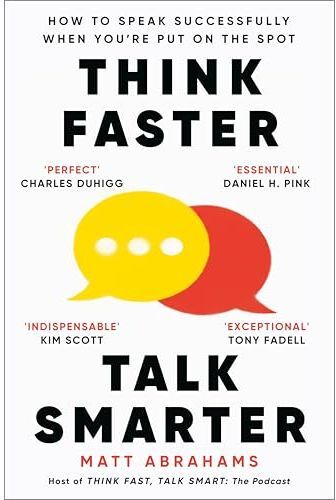
MACMILLAN Think Faster, Talk Smarter: How to Speak Successfully When You're Put on the SpotCommunication is crucial to success in life and business. However, it is not just big speeches that matter: it is also those critical, spur-of-the-moment situations for which we cannot prepare. A prospective client asking unexpected questions during a sales pitch, a teacher singling you out for an answer during a class, a high-pressure meeting with senior executives at work, or even a heartwarming toast to deliver on the spot. All are fraught scenarios that might cause you to freeze up. The pandemic boosted this fear, by stripping the spontaneity from communication during lockdown, and then changing the communication landscape in the years since. In this invaluable guide, Matt Abrahams provides a six-point methodology that will enable you to manage these stressful, impromptu circumstances to create and deliver crisp, compelling and calm communication. Think Faster, Talk Smarter is an energetic, engaging resource for anyone who wants to speak out, spread their ideas, and ultimately share their story.4,99 £*Shipping: 1,99 £Secure redirect to the provider
-
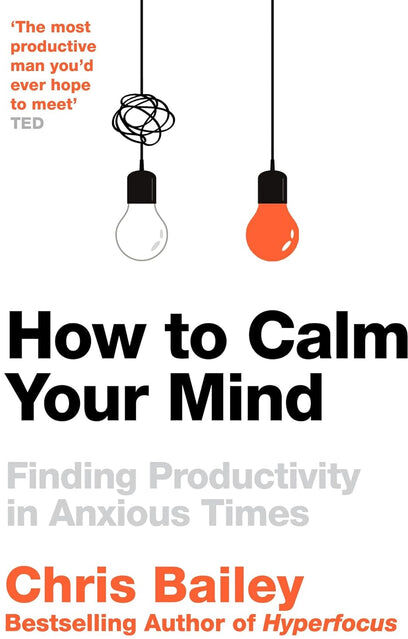
Pan Macmillan (Macmillan Business) How to Calm Your Mind: Finding Productivity in Anxious Times by Chris Bailey - Paperback - Non Fiction - Beat Burnout & Boost FocusDiscover how to calm your mind and find productivity in anxious times with this research-driven paperback from productivity expert Chris Bailey. After experiencing burnout, Bailey turned his research toward creating the mental space needed to do anything well. This book blends psychology, neuroscience, and personal story to help stressed professionals, students, and parents reclaim focus, creativity, and energy by treating calm as the foundation of getting things done well. Written by Chris Bailey, a renowned productivity expert who spent years studying the subject and testing techniques on himself, this book offers a unique perspective on achieving genuine productivity.2,99 £*Shipping: 2,99 £Secure redirect to the provider
-
What is the difference between ecological potential and tolerance range?
Ecological potential refers to the full range of environmental conditions under which a species can survive and reproduce, including optimal conditions for growth and reproduction. Tolerance range, on the other hand, refers to the specific range of environmental conditions within which a species can survive and function, beyond which it may experience stress or even death. In essence, ecological potential is the broader range of conditions a species can potentially inhabit, while tolerance range is the narrower range within which it can actually thrive. **
-
What is the difference between ecological potential and the tolerance range?
Ecological potential refers to the maximum level of environmental conditions that a species can tolerate and thrive in, including factors such as temperature, humidity, and food availability. Tolerance range, on the other hand, refers to the range of environmental conditions within which a species can survive, but not necessarily thrive. In other words, ecological potential represents the optimal conditions for a species, while the tolerance range represents the broader range of conditions within which it can still survive. **
-
Is there a difference between ecological potency and the tolerance range?
Yes, there is a difference between ecological potency and tolerance range. Ecological potency refers to the ability of a species to exert an influence on its environment, such as through competition or predation. Tolerance range, on the other hand, refers to the range of environmental conditions within which a species can survive and reproduce. In other words, ecological potency is about the impact a species has on its environment, while tolerance range is about the environmental conditions a species can withstand. **
-
How is the range determined?
The range is determined by finding the difference between the highest and lowest values in a set of data. It represents the spread or variability of the data and provides a measure of the dispersion of the values. By subtracting the lowest value from the highest value, we can calculate the range and understand the extent of the data's distribution. The range is a simple and quick way to assess the spread of the data, but it can be sensitive to outliers and may not provide a complete picture of the data's variability. **
* All prices are inclusive of VAT and, if applicable, plus shipping costs. The offer information is based on the details provided by the respective shop and is updated through automated processes. Real-time updates do not occur, so deviations can occur in individual cases. ** Note: Parts of this content were created by AI.