Buy coexistence.eu ?
We are moving the project
coexistence.eu .
Are you interested in purchasing the domain
coexistence.eu ?
domain@kv-gmbh.de · 0541-91531010
Buy coexistence.eu ?
From which years are Asti Spumante No. 22725 and 51831?
Asti Spumante No. 22725 was produced between 1960 and 1969, while Asti Spumante No. 51831 was produced between 1970 and 1979. These two Asti Spumante vintages are from different decades, with No. 22725 being from the 1960s and No. 51831 from the 1970s. **
From which years are Asti Spumante No. 22725 and 51831 from?
Asti Spumante No. 22725 is from the years 2010-2019, while Asti Spumante No. 51831 is from the years 2020-2029. **

Similar search terms for Pato-Filipa-Spumante-Metodo
Top-Angebote
Products related to Pato-Filipa-Spumante-Metodo:
-
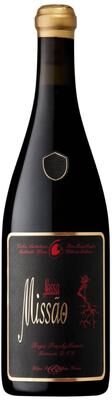
"""Filipa Pato""" """Filipa Pato Bairrada Missao Baga 2023 Red Wine""""""100% Baga An expressive and elegant expression of this native grape. Aromas of bitter liqueur, anise, macerated black cherries, tobacco leaves, dried rose petals and violets, with a rich, refined palate and supple tannins. From a vineyard planted..."169,99 $*Shipping: 0,00 $Secure redirect to the provider
-
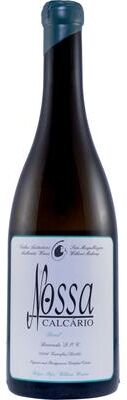
"""Filipa Pato""" """Filipa Pato Bairrada Nossa Calcario Bical 2025 White Wine""""""This wine is made from handpicked grapes from a single parcel planted in the 1980s on clay-limestone in the renowned valley of Óis do Bairro. It is then slowly whole-cluster pressed and spontaneously fermented in neutral 500L pipas in a cold..."42,99 $*Shipping: 0,00 $Secure redirect to the provider
-
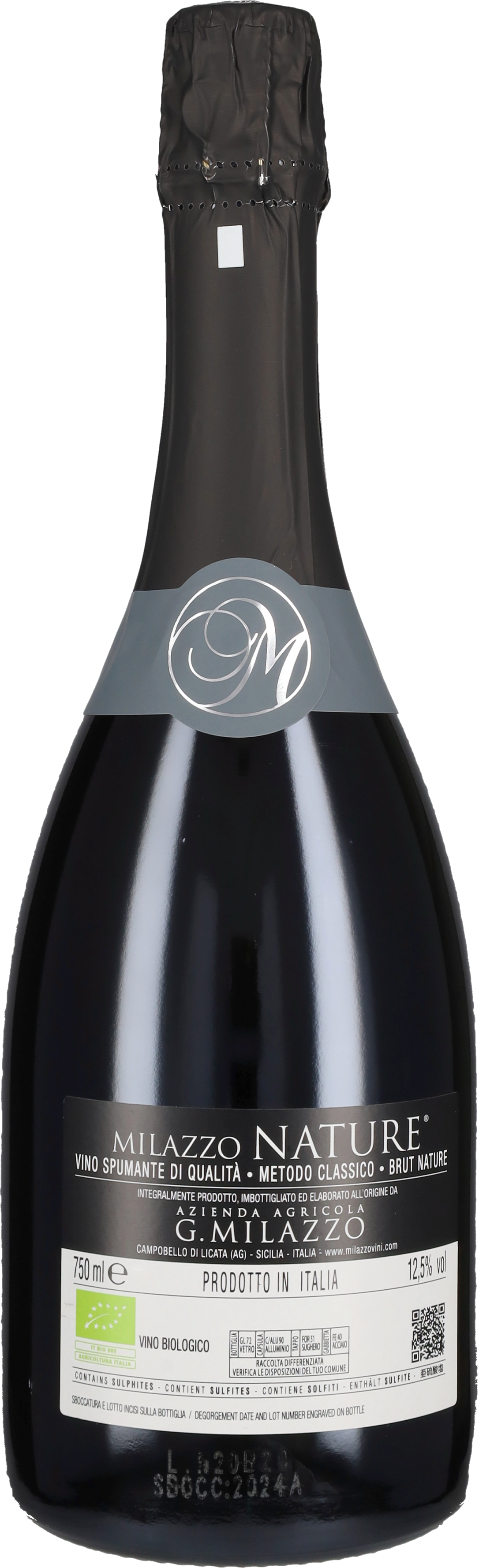
Spumante Metodo Classico Nature MilazzoThe Metodo Classico Nature from the Milazzo winery is a Sicilian sparkling wine, originating from the Licata area. It is a blanc de blancs made solely from pure Chardonnay grapes, which, thanks to perfect ripening, impart freshness and aromatic intensity to the wine. The interior of Licata consists of a hilly area particularly suited for the cultivation of white grape varieties, which, if harvested at the right time, can also provide excellent sparkling bases. It is an elegant classic method, which, thanks to the absence of dosage, maintains its vertical and taut profile, perfect for those who love the expressive purity of great Chardonnays. The Spumante Nature from Milazzo is a Metodo Classico that originates from a reality still with a familial face, producing wine for five generations, in a territory particularly suited for enhancing indigenous grape varieties, but which has also proven suitable for the most famous international varieties. The excellent results of Chardonnay have convinced them to pursue the path of Metodo Classico. Today, the estate extends over 75 hectares with vineyards cultivated at about 400 meters above sea level, in a sunny hilly area, which presents a great heterogeneity of soils, so as to dedicate to each grape variety the plots most suitable for its needs. The Spumante is the result of a perfect synthesis between suited lands, a constantly ventilated Mediterranean climate, and a great grape variety like Chardonnay. It is thanks to the perfect combination of these components that a Metodo Classico among the most interesting in Sicily is born. The Nature from the Milazzo winery is a Metodo Classico made with a selection of the best grapes. After a soft pressing, the must is fermented in steel. Before the blending and the creation of the final cuvée, the base wines mature for a few months in steel. The second fermentation takes place in the bottle according to the Metodo Classico, with aging on the lees for 48 months. It presents itself with a bright light yellow color, crossed by a fine and continuous perlage. On the nose, it opens with delicate floral notes, scents of orange blossom, aromas of Mediterranean scrub herbs, yellow fruit, hints of bread crust and mineral puffs of flint. The sip is taut and smooth, with a rich and harmonious fruit. The finish is of lively freshness, with a savory closure.39,00 £*Shipping: 48,00 £Secure redirect to the provider
-
What can music contribute to peace, hope, and tolerance?
Music has the power to bring people together, promote understanding, and inspire hope. It can serve as a universal language that transcends cultural and linguistic barriers, fostering a sense of unity and connection among diverse communities. Through its emotive and expressive nature, music can also evoke feelings of empathy and compassion, encouraging individuals to embrace tolerance and understanding. Additionally, music has the ability to provide solace and comfort during times of conflict and uncertainty, offering a sense of peace and optimism for a better future. **
-
What is the unity debate in relation to the diversity party?
The unity debate in relation to the diversity party revolves around the tension between promoting unity within the party and embracing the diverse perspectives and voices within the party. Some members may argue that unity is essential for the party's success and that differences should be minimized in order to present a cohesive front to the public. On the other hand, others may argue that the party's strength lies in its diversity and that embracing and celebrating different perspectives is crucial for representing a wide range of constituents. This debate often involves discussions about how to balance unity and diversity within the party's messaging, policies, and leadership. **
-
What is the difference between inclusion rate and inclusion quota?
Inclusion rate refers to the percentage of a specific group of people within a larger population, such as the percentage of women in a company's workforce. Inclusion quota, on the other hand, refers to a specific numerical target or requirement for the representation of a particular group, such as a company setting a quota for the number of employees from underrepresented communities. While inclusion rate measures the proportion of a group within a population, inclusion quota sets a specific target for the representation of that group. **
-
Was Bismarck the architect of German unity or a peace-threatening power politician?
Bismarck can be seen as both the architect of German unity and a peace-threatening power politician. On one hand, he played a crucial role in unifying the German states through his political maneuvering and military victories. However, his aggressive and manipulative tactics, such as the use of "blood and iron" and the manipulation of conflicts to achieve his goals, also made him a peace-threatening power politician. Bismarck's actions ultimately led to the destabilization of the European balance of power and contributed to the tensions that eventually erupted into World War I. **
Was Bismarck the blacksmith of German unity or a peace-threatening power politician?
Bismarck is often seen as the blacksmith of German unity due to his role in unifying the German states under Prussian leadership in 1871. However, his methods were often seen as aggressive and manipulative, leading to tensions with other European powers. Bismarck's realpolitik approach to diplomacy and his willingness to use military force to achieve his goals earned him a reputation as a peace-threatening power politician. Ultimately, Bismarck's legacy is complex, as he played a crucial role in shaping modern Germany while also being a controversial figure in international relations. **
What exactly does inclusion mean in the Hamburg Pride Inclusion Truck?
The Hamburg Pride Inclusion Truck represents the idea of inclusion by providing a platform for people of all sexual orientations, gender identities, and backgrounds to come together and celebrate diversity. In this context, inclusion means creating a space where everyone feels welcome and accepted, regardless of their differences. The Inclusion Truck aims to promote a sense of belonging and unity within the LGBTQ+ community and beyond, emphasizing the importance of embracing and celebrating all forms of diversity. **
Top-Angebote
Products related to Pato-Filipa-Spumante-Metodo:
-
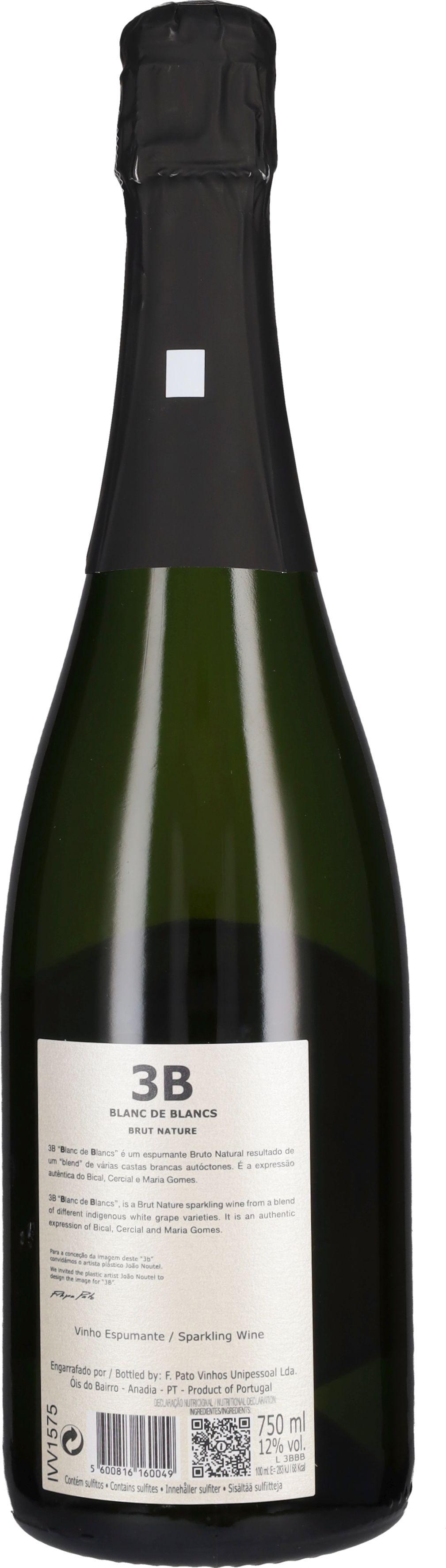
Pato Filipa Spumante Metodo Classico Blanc de Blancs '3B' Filipa PatoThe Classic Method Blanc de Blancs “3B” by Filipa Pato is a Portuguese sparkling wine produced in the Bairrada region with three historically cultivated white grape varieties in the area: Bical, Maria Gomes, and Sercial. The choice to use indigenous grapes gives the cuvée a unique and strong personality, far from the classic stereotypes that refer to the Champagne model. It is a label with a typically territorial taste, which, thanks to a rather short aging on the lees, keeps the varietal aspects and primary aromas of the grapes in the foreground. Its floral scents, delicate fruit, combined with a distinct salinity, make it a perfect Sparkling Wine to enjoy at aperitif time or with delicate fish appetizers. The Blanc de Blancs “3B” sparkling wine is a Classic Method result of the initiative and desire to experiment of Filipa Pato, who has been managing an estate in the Bairrada region since 2001, a few kilometers north of the city of Coimbra. A magnificent hilly area not far from the ocean, which has proven to be very suitable, especially for white grapes. The soils are predominantly clay-limestone, with abundant sand presence. The 12 hectares of vineyard are managed biodynamically to not alter the natural balance of nature and produce genuine wines that can speak of the territory in a straightforward and direct way. From an enological point of view, the principle of minimal human intervention is adopted, with spontaneous fermentations and the use of indigenous yeasts. A artisanal philosophy that aims to guide nature without ever invading the field, to let the grape express itself in the most natural way possible.has proven to be very suitable, especially for white grapes. The soils are predominantly clay-limestone, with abundant sand presence. The 12 hectares of vineyard are managed biodynamically to not alter the natural balance of nature and produce genuine wines that can speak of the territory in a straightforward and direct way. From an enological point of view, the principle of minimal human intervention is adopted, with spontaneous fermentations and the use of indigenous yeasts. An artisanal philosophy that aims to guide nature without ever invading the field, to let the grape express itself in the most natural way possible.The Blanc de Blancs “3B” from the Portuguese winery of Filipa Pato is a Classic Method Sparkling Wine for curious and unconventional palates, who always want to discover and taste something new. At the end of fermentation, the base wines rest in steel, and after the creation of the cuvée, the second fermentation takes place in the bottle, with a resting on the lees of about ten months. In the glass, it presents a bright straw yellow color, with a fine and subtle perlage.16,00 £*Shipping: 48,00 £Secure redirect to the provider
-
"""Filipa Pato""" """Filipa Pato Bairrada Missao Baga 2023 Red Wine""""""100% Baga An expressive and elegant expression of this native grape. Aromas of bitter liqueur, anise, macerated black cherries, tobacco leaves, dried rose petals and violets, with a rich, refined palate and supple tannins. From a vineyard planted..."169,99 $*Shipping: 0,00 $Secure redirect to the provider
-
"""Filipa Pato""" """Filipa Pato Bairrada Nossa Calcario Bical 2025 White Wine""""""This wine is made from handpicked grapes from a single parcel planted in the 1980s on clay-limestone in the renowned valley of Óis do Bairro. It is then slowly whole-cluster pressed and spontaneously fermented in neutral 500L pipas in a cold..."42,99 $*Shipping: 0,00 $Secure redirect to the provider
-
From which years are Asti Spumante No. 22725 and 51831?
Asti Spumante No. 22725 was produced between 1960 and 1969, while Asti Spumante No. 51831 was produced between 1970 and 1979. These two Asti Spumante vintages are from different decades, with No. 22725 being from the 1960s and No. 51831 from the 1970s. **
-
From which years are Asti Spumante No. 22725 and 51831 from?
Asti Spumante No. 22725 is from the years 2010-2019, while Asti Spumante No. 51831 is from the years 2020-2029. **
-
What can music contribute to peace, hope, and tolerance?
Music has the power to bring people together, promote understanding, and inspire hope. It can serve as a universal language that transcends cultural and linguistic barriers, fostering a sense of unity and connection among diverse communities. Through its emotive and expressive nature, music can also evoke feelings of empathy and compassion, encouraging individuals to embrace tolerance and understanding. Additionally, music has the ability to provide solace and comfort during times of conflict and uncertainty, offering a sense of peace and optimism for a better future. **
-
What is the unity debate in relation to the diversity party?
The unity debate in relation to the diversity party revolves around the tension between promoting unity within the party and embracing the diverse perspectives and voices within the party. Some members may argue that unity is essential for the party's success and that differences should be minimized in order to present a cohesive front to the public. On the other hand, others may argue that the party's strength lies in its diversity and that embracing and celebrating different perspectives is crucial for representing a wide range of constituents. This debate often involves discussions about how to balance unity and diversity within the party's messaging, policies, and leadership. **
Similar search terms for Pato-Filipa-Spumante-Metodo
-
Spumante Metodo Classico Nature MilazzoThe Metodo Classico Nature from the Milazzo winery is a Sicilian sparkling wine, originating from the Licata area. It is a blanc de blancs made solely from pure Chardonnay grapes, which, thanks to perfect ripening, impart freshness and aromatic intensity to the wine. The interior of Licata consists of a hilly area particularly suited for the cultivation of white grape varieties, which, if harvested at the right time, can also provide excellent sparkling bases. It is an elegant classic method, which, thanks to the absence of dosage, maintains its vertical and taut profile, perfect for those who love the expressive purity of great Chardonnays. The Spumante Nature from Milazzo is a Metodo Classico that originates from a reality still with a familial face, producing wine for five generations, in a territory particularly suited for enhancing indigenous grape varieties, but which has also proven suitable for the most famous international varieties. The excellent results of Chardonnay have convinced them to pursue the path of Metodo Classico. Today, the estate extends over 75 hectares with vineyards cultivated at about 400 meters above sea level, in a sunny hilly area, which presents a great heterogeneity of soils, so as to dedicate to each grape variety the plots most suitable for its needs. The Spumante is the result of a perfect synthesis between suited lands, a constantly ventilated Mediterranean climate, and a great grape variety like Chardonnay. It is thanks to the perfect combination of these components that a Metodo Classico among the most interesting in Sicily is born. The Nature from the Milazzo winery is a Metodo Classico made with a selection of the best grapes. After a soft pressing, the must is fermented in steel. Before the blending and the creation of the final cuvée, the base wines mature for a few months in steel. The second fermentation takes place in the bottle according to the Metodo Classico, with aging on the lees for 48 months. It presents itself with a bright light yellow color, crossed by a fine and continuous perlage. On the nose, it opens with delicate floral notes, scents of orange blossom, aromas of Mediterranean scrub herbs, yellow fruit, hints of bread crust and mineral puffs of flint. The sip is taut and smooth, with a rich and harmonious fruit. The finish is of lively freshness, with a savory closure.39,00 £*Shipping: 48,00 £Secure redirect to the provider
-
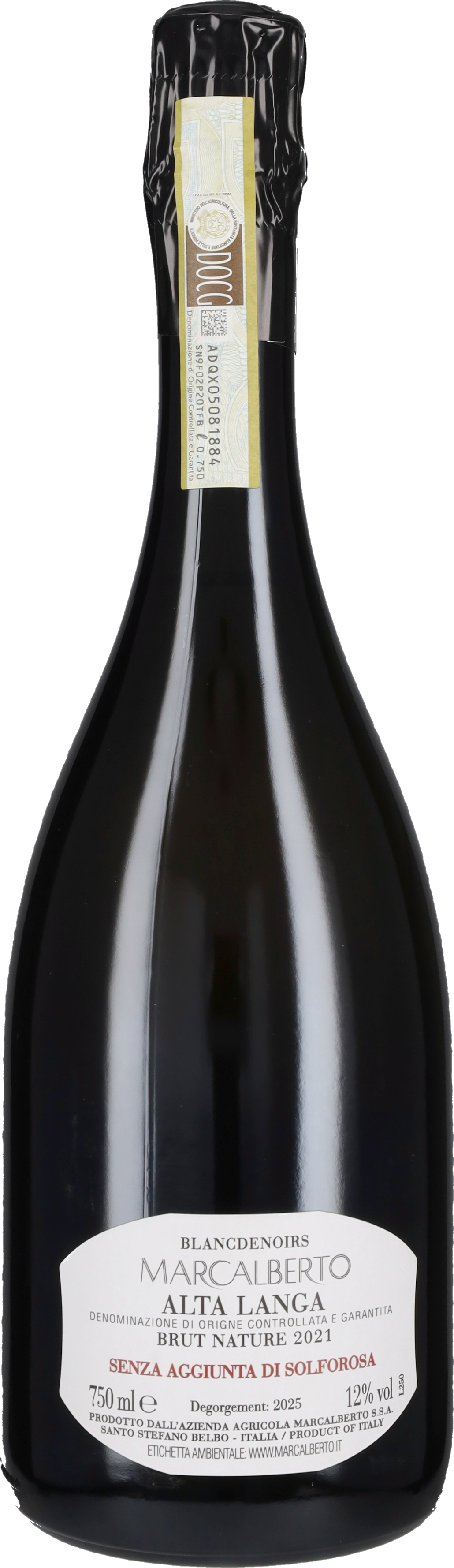
Spumante Metodo Classico Nature MarcalbertoThe Spumante Metodo Classico Nature by Marcalberto is an excellence crafted with care and artisanal attention by a winery located in Piemonte, based in Santo Stefano Belbo. It is a label born from a passion for great Champagnes and the desire to enhance the best Pinot Nero grapes from the estate, aiming to preserve their maximum expressive purity. Soft pressing, careful processing of the musts, and the choice not to use sulfur allow the wine to maintain an integrity and aromatic richness that express themselves through a balance and harmony so perfect that no dosage is required. The Metodo Classico Nature by Marcalberto is a sparkling wine that originates from a small family-run reality. The Pinot Nero vineyards are located in beautiful hilly, sunny, and ventilated positions, at an altitude between 300 and 500 meters above sea level, in the municipalities of Santo Stefano Belbo, Calosso, Cossano Belbo, and Loazzolo. The harvest is carried out manually at the beginning of September, and the best bunches, healthier and mature, selected directly in the vineyard, are pressed using a traditional marmonnier press, generally used in Champagne by small artisanal houses that focus solely on quality. The pressing, in fact, is particularly soft and allows for the production of clear, bright musts of extraordinary purity. The base wines ferment in French oak barrels and remain in aging on the fine lees in the same wood until the moment of blending. The second fermentation takes place in the bottle according to the Metodo Classico, with a stay on the lees of about 30 months. The Spumante Metodo Classico Nature Marcalberto is a bottle for purists, dedicated to those who love to savor a great Blanc de Noirs in its most authentic form. It presents in the glass a beautiful bright light yellow with brilliant golden reflections and a fine, delicate, and very persistent perlage. The bouquet is elegant, intense, with aromas reminiscent of lime zest, bitter orange, fragrances of ripe citrus, aromas of white-fleshed fruit, apple, peach, hints of bread crust and toasted bread. On the palate, it has a good structure, with a long and deep sip, savory and austere, characterized by pleasant fruity notes, leading to a decisive, dry finish with remarkable freshness.41,00 £*Shipping: 48,00 £Secure redirect to the provider
-
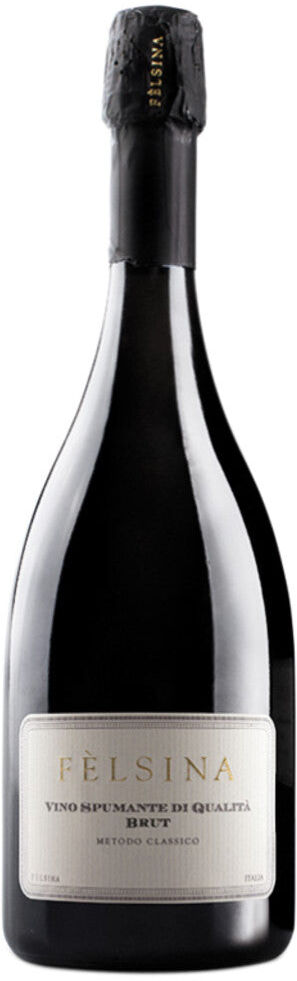
Spumante Metodo Classico Brut FelsinaThe Brut Metodo Classico from the Felsina winery is an elegant, fresh, and delicate sparkling wine produced in Castelnuovo Berardenga, in that part of Chianti Classico in the province of Siena, Tuscany, where the landscape opens up towards the horizon, the Monte Amiata, and the view becomes wonderful. It comes to life from a blend of grapes that sees Sangiovese, which appears predominantly, joining Pinot Nero and Chardonnay in an excellent and very well-balanced manner. The vineyards, located on hills at over 300 meters above sea level, are cultivated according to organic farming methods, also using biodynamic preparations, on mixed soils rich in quartz sandstones, alberese, and silt. The winery, owner of over 94 hectares of vineyards, was purchased in 1966 by Domenico Poggiali and is now managed by Giuseppe Mazzolin, a professor of Latin and Greek originally from Venice, who moved to Tuscany for love and continued the founder's work, bringing Felsina to achieve significant international recognition. The Brut Metodo Classico sparkling wine from Felsina is a non-vintage sparkling wine made from grapes harvested by hand and carefully selected at the moment of their perfect ripeness. The bunches are brought to the winery to be pressed directly and subjected to static cold decantation of the must for several hours. This is followed by alcoholic fermentation, which takes place using exclusively indigenous yeasts, in temperature-controlled stainless steel containers for several weeks. The base wine obtained is then blended with reserve wine and liqueur de tirage to trigger the second fermentation in the bottle, which lasts for about 20-22 months. After the aging period on the lees, disgorgement is carried out, and liqueur d’expedition is added, with dosage as per the brut category, after which the sparkling wine ages for an additional 3 months in the bottle before being released for sale. The Metodo Classico Spumante Brut from Felsina presents itself with a bright straw-yellow color, with slight greenish reflections and a fine and persistent perlage. On the nose, intense aromas of crunchy fruit and yellow fruit appear, including golden apple and peach, floral notes of white flowers, hints of pastry and bread crust. On the palate, it is clear, fresh, and vertical, characterized by good sapidity and a long finish with aromatic returns reminiscent of exotic fruit. This sparkling wine from the Felsina winery is well-made, young, and balanced, to be enjoyed without waiting too long.18,00 £*Shipping: 48,00 £Secure redirect to the provider
-
What is the difference between inclusion rate and inclusion quota?
Inclusion rate refers to the percentage of a specific group of people within a larger population, such as the percentage of women in a company's workforce. Inclusion quota, on the other hand, refers to a specific numerical target or requirement for the representation of a particular group, such as a company setting a quota for the number of employees from underrepresented communities. While inclusion rate measures the proportion of a group within a population, inclusion quota sets a specific target for the representation of that group. **
-
Was Bismarck the architect of German unity or a peace-threatening power politician?
Bismarck can be seen as both the architect of German unity and a peace-threatening power politician. On one hand, he played a crucial role in unifying the German states through his political maneuvering and military victories. However, his aggressive and manipulative tactics, such as the use of "blood and iron" and the manipulation of conflicts to achieve his goals, also made him a peace-threatening power politician. Bismarck's actions ultimately led to the destabilization of the European balance of power and contributed to the tensions that eventually erupted into World War I. **
-
Was Bismarck the blacksmith of German unity or a peace-threatening power politician?
Bismarck is often seen as the blacksmith of German unity due to his role in unifying the German states under Prussian leadership in 1871. However, his methods were often seen as aggressive and manipulative, leading to tensions with other European powers. Bismarck's realpolitik approach to diplomacy and his willingness to use military force to achieve his goals earned him a reputation as a peace-threatening power politician. Ultimately, Bismarck's legacy is complex, as he played a crucial role in shaping modern Germany while also being a controversial figure in international relations. **
-
What exactly does inclusion mean in the Hamburg Pride Inclusion Truck?
The Hamburg Pride Inclusion Truck represents the idea of inclusion by providing a platform for people of all sexual orientations, gender identities, and backgrounds to come together and celebrate diversity. In this context, inclusion means creating a space where everyone feels welcome and accepted, regardless of their differences. The Inclusion Truck aims to promote a sense of belonging and unity within the LGBTQ+ community and beyond, emphasizing the importance of embracing and celebrating all forms of diversity. **
* All prices are inclusive of VAT and, if applicable, plus shipping costs. The offer information is based on the details provided by the respective shop and is updated through automated processes. Real-time updates do not occur, so deviations can occur in individual cases. ** Note: Parts of this content were created by AI.